Do You Own Your Money—or Did You Trade It for Income?
Sep 10, 2026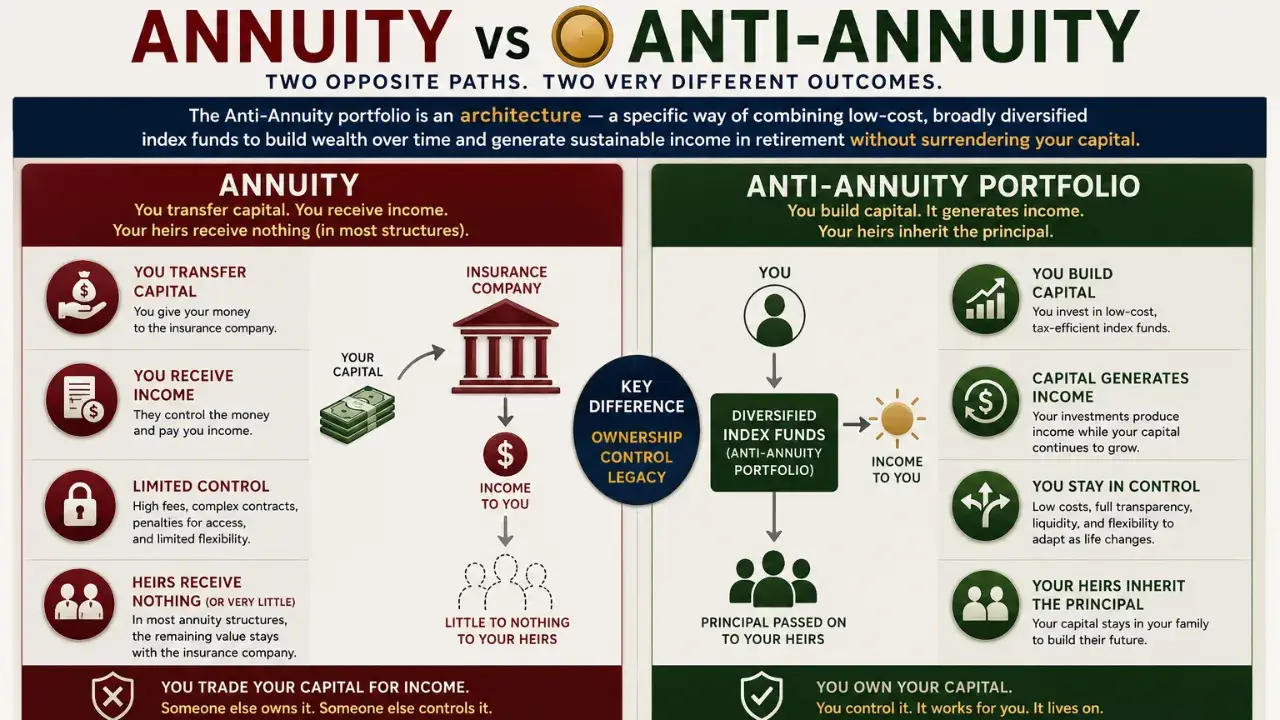
"If you don’t find a way to make money while you sleep, you will work until you die." — Warren Buffett
By Clifton Vaughn,
Higher Ground Financial Coaching
The Retirement Decision Few People Fully Understand The Hidden Tradeoff Behind "Income for Life" and the Decisions that Determine what happens to your Money when you are gone.
After decades of working, saving, and sacrificing, many people reach retirement with one primary concern:
"Will my money last as long as I do?"
That is a legitimate concern.
The fear of running out of money is real. The desire for predictable income is understandable. And this is exactly why financial products promising "income for life" are so appealing.
But there is another question that deserves equal attention:
"What happens to the wealth I spent my lifetime building when I am no longer here?"
That question is often overlooked and it may be one of the most important wealth decisions you ever make.
The tradeoff behind "income for life"
Annuities are often presented as a solution to retirement uncertainty.
You exchange a lump sum of money for a future stream of income designed to continue throughout your lifetime.
The promise is appealing:
Security. Predictability. Income you cannot outlive.
But every financial decision involves a tradeoff.
One of the tradeoffs many people fail to fully understand is the relationship between:
Lifetime income today versus Ownership and control of your capital tomorrow
Depending on the type of annuity and the options selected, if you are gone before receiving back the full value of your original capital, the remaining funds may not pass to your heirs.
The insurance company may keep what remains.
That means the money you worked decades to accumulate may not benefit the people you hoped it would.
Your children.
Your grandchildren.
Your family.
Your legacy.
Before you make an annuity decision, understand the question most people never ask
Before making any major retirement decision, ask:
"Who owns my money after this decision is made?"
Ownership matters.
Because wealth is not just about receiving income.
Wealth is about controlling capital.
Your money represents:
-
Years of work
-
Decisions you made
-
Sacrifices you accepted
-
Opportunities you created
-
The future you hoped to provide for others
A retirement strategy should not only answer:
"How much income can this create?"
It should also answer:
"What happens to the wealth I built?"
Learn the alternative approach
The Anti-Annuity Portfolio Guide was created to help you understand another way to think about retirement income.
Discover how a properly designed portfolio may allow your assets to continue working, potentially creating income while preserving ownership of your capital and keeping open the possibility of leaving a legacy.
The hidden annuities you may never realize you are choosing
When most people hear the word "annuity," they picture a retirement product sold by an insurance company.
But the annuity concept appears in more places than most people realize.
Sometimes it is not presented as an annuity at all.
It appears whenever someone is given a choice:
"Would you like a lump sum today, or a guaranteed stream of payments over time?"
That decision has the same fundamental tradeoff:
Immediate ownership and control of capital vs. A future income stream with reduced control over the underlying money
Understanding this principle can change how you evaluate many financial decisions.
Lottery winnings: the choice between wealth ownership and future payments
Lottery winners are often offered two choices:
-
A lump-sum payment today
-
A jackpot paid over many years
The installment option is essentially an annuity structure.
The attraction is obvious:
Guaranteed payments over time.
But the deeper question is:
Would you rather own and manage the capital, or receive payments from a structure someone else controls?
A lump sum provides ownership of the asset.
That capital can potentially be invested, managed, protected, and passed to heirs.
The payment option provides income but limits control over the underlying wealth.
The choice is not simply about money.
It is about ownership.
Structured settlements: when your settlement becomes a payment stream
Structured settlements are another example.
Instead of receiving the full settlement amount, a person may receive scheduled payments over time.
The question is not simply:
"Do I want guaranteed payments?"
The more important question is:
"Do I want ownership of the settlement capital, or do I want someone else controlling that capital and sending me payments?"
For some people, scheduled payments may provide valuable protection and stability.
For others, maintaining ownership and control of the capital may better support their long-term goals.
The decision requires understanding the tradeoff.
Inherited retirement accounts: protecting someone else's hard work
Inherited retirement accounts represent years of someone else's discipline and sacrifice.
When receiving inherited wealth, the goal should not simply be:
"How do I get money from this account?"
The better question is:
"How do I manage this asset so it continues building wealth?"
The principle remains the same:
Preserve ownership.
Understand control.
Make intentional decisions.
A lifetime of wealth-building should not automatically become a series of disconnected payments without understanding the long-term impact.
Pension buyouts: exchanging future payments for ownership
Many companies offer employees a choice:
-
Continue receiving pension payments
-
Accept a lump-sum buyout
This is another version of the same decision.
Do you want:
A future income stream?
Or:
Control of the capital that can potentially create income?
The right decision depends on many factors:
-
Longevity expectations
-
Investment ability
-
Interest rates
-
Inflation
-
Financial goals
-
Legacy objectives
But the ownership question remains:
Who controls the money?
The Anti-Annuity principle: understand before you decide
The Anti-Annuity principle is not about rejecting every income stream.
It is about understanding the tradeoff.
Whenever a financial decision involves exchanging a lump sum of capital for future payments, ask:
-
Who owns the underlying capital?
-
What happens if I no longer need the income?
-
What happens when I am gone?
-
Can the remaining wealth benefit the people I care about?
These are wealth architecture questions.
And they deserve thoughtful answers before making decisions that could affect your financial future for decades.
Your money represents your life's work
The money you have accumulated is more than a number.
It represents:
-
Your time
-
Your effort
-
Your discipline
-
Your sacrifices
-
Your hopes for your family
Before you hand over ownership of your capital, understand all of your options. The Anti-Annuity Portfolio Guide shows you an alternative way to think about retirement income—one focused on keeping ownership of your wealth while creating a strategy designed around income, growth, and legacy.
Your money worked for you during your career.
Make sure it continues working for you—and the people you care about—when you are gone.
Keep Reading
- The Ultimate Retirement Secret: Using Your HSA for Long-Term Wealth
- The 3 Buckets of Wealth: Why You Must Build Wealth Beyond Your Job and Your Business
- Why Your First $100,000 Is the Hardest—And Why the Second $100,000 Comes Faster
- Why Everyone Should Use a Future Wealth Calculator
- Build Wealth Without Earning More
Start with our Basecamp Community
We are spreading the good news of financial clarity and freedom
Don't worry, your information will not be shared.
We hate SPAM. We will never sell your information, for any reason.
Author