
Stop Upgrading Your iPhone: The Invisible Wealth Destroyer
Oct 01, 2026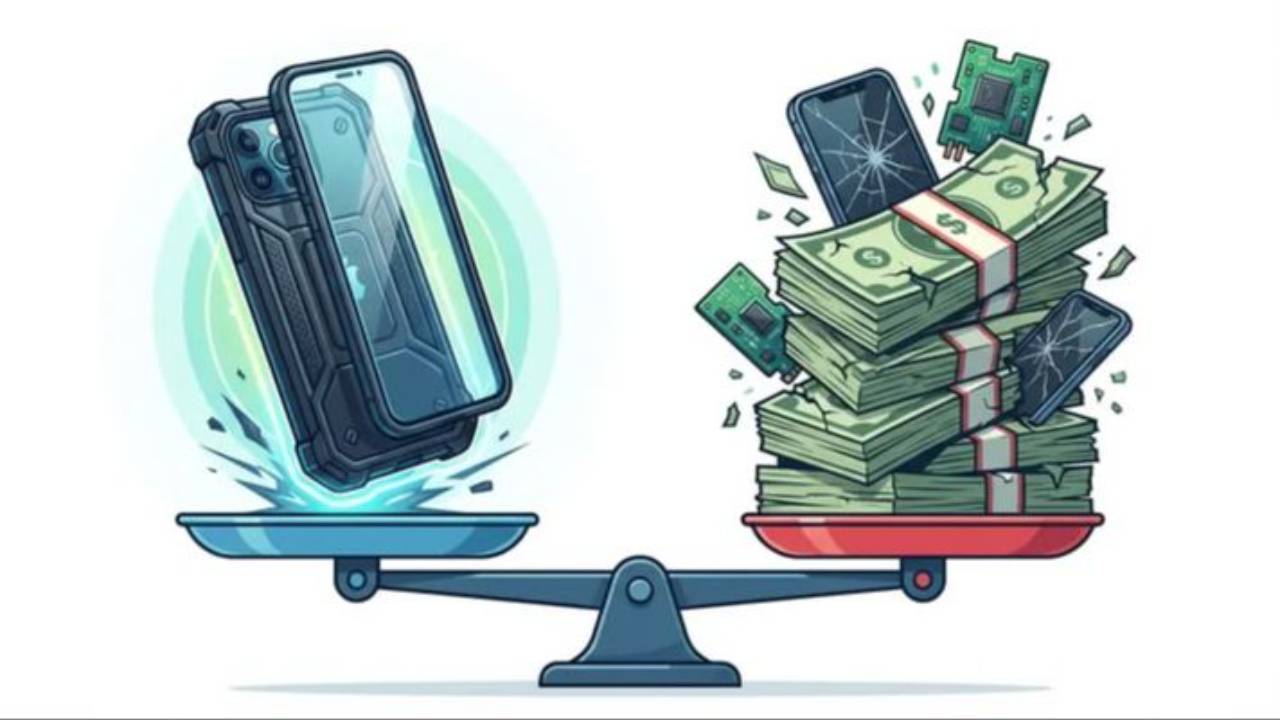
We have all been there. You are sitting at a coffee shop, your iPhone 14, 15 or 17 sitting flat on the table. It is fast, the screen is scratch-free, and it handles everything you throw at it without a stutter. It is, by all definitions, a perfectly good piece of engineering.
Then the notification drops. A new model has been announced.
Suddenly, your perfectly functional device starts to look a little dimmer. The marketing tells you the new camera has 10% faster focus tracking. The tech influencers assure you that the localized AI processing is a "game-changer." Within three weeks, you are at a retail store handing over your working phone to sign a new 36-month carrier installment contract.
You didn't upgrade because your old phone broke. You upgraded because you were hit with a hidden levy: The Tech Lifestyle Tax.
Understanding the Invisible Tax
In traditional economics, a tax is a compulsory financial charge imposed by the government. In personal finance, a Lifestyle Tax is a voluntary financial premium you pay to maintain an illusion of status, currency, or convenience.
The brilliance of modern consumer technology companies is that they have converted a hardware purchase into a psychological subscription. By decoupling the actual $1,000 price tag of a phone into a frictionless $25 or $35 monthly line item on your carrier bill, the consumer stops viewing the phone as a capital expense. Instead, they view it as an ongoing utility—like water or electricity.
When a carrier tells you that you can trade in your working phone and keep your monthly bill exactly the same, your brain registers the transaction as a "free upgrade."
But it isn't free. It is an extension of debt. You are signing away another 36 months of your cash flow, ensuring that your net-worth baseline remains tethered to a depreciating piece of glass and aluminum. You pay the tax in the form of opportunity cost.
The Compounding Cost of "Just $25 a Month"
To understand how this tax directly reduces your capacity to build personal wealth, we have to look past the immediate transaction and calculate the compounding velocity of missed investments.
Let’s trace a conservative scenario: Instead of paying a perpetual tech premium—whether through direct device financing, higher-tier data plan requirements for "free promotional pricing," or early trade-in penalties—you decide to break the cycle. You keep your functional iPhone for 6 or 7 years instead of upgrading every 2 to 3 years, investing that average $25 a month leak into a broad-market index fund returning an average of 8% annually.
Here is what that minor, seemingly insignificant adjustment looks like over time:
When you look at the math, the reality of the Lifestyle Tax becomes starkly clear:
- The Immediate Illusion: You think you are just getting a better camera.
- The Wealth Impact: Over a standard 30-year working career, that single, continuous monthly tech leak quietly strips Word $37,507 out of your ultimate retirement nest egg.
If you expand this behavior across an entire household—upgrading two parents' phones, adding tablets, and cycling through smartwatches every few seasons—that $25 leak easily balloons into a $100 to $150 monthly tax. Over 30 years, a $100 monthly leak compounds to over $150,000. That is the difference between an early retirement or an extra five years under corporate fluorescent lights.
The Wealth-Builder’s Arbitrage: Refurbished Tech over Early Adoption
If your phone actually breaks or truly hits the end of its security software lifecycle, you still don't have to pay the full Lifestyle Tax. You can opt out of the system entirely by avoiding the Early Adopter Trap and leveraging the power of Refurbished Arbitrage.
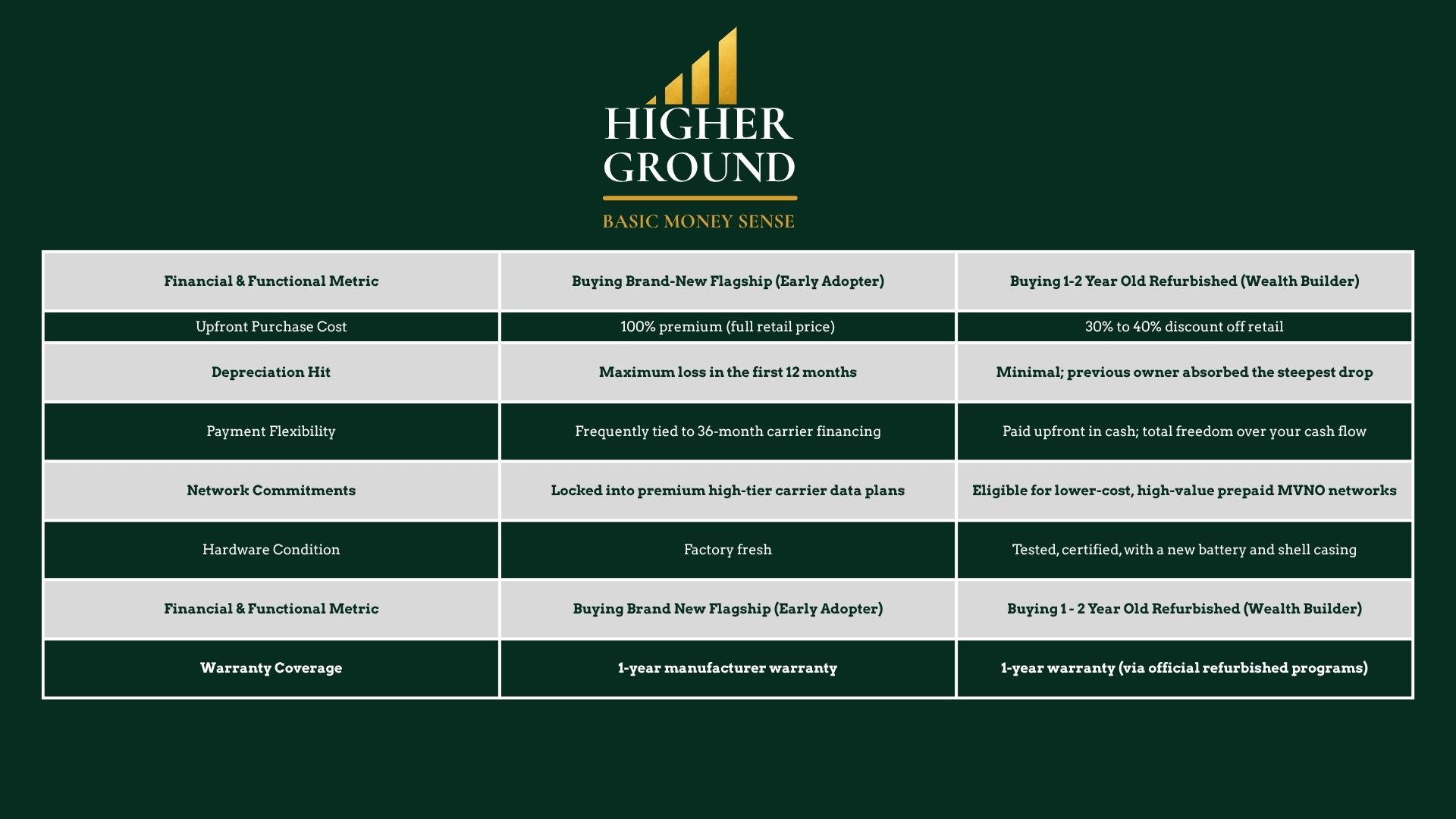
- Letting Others Pay for Depreciation. The moment a brand-new iPhone leaves the retail store, it behaves exactly like a new car: it suffers an immediate, brutal hit of depreciation. Early adopters willingly pay a premium to capture the first 12 months of a device's life.
By waiting just one to two years and purchasing a certified refurbished model, you let someone else eat that steep loss in value. Tech hardware has matured so significantly that an iPhone from 18 months ago performs at 95% of the capability of today’s flagship model, but at a fraction of the cost.
- The Myth of the "Used" Phone. Many consumers shy away from older models because they associate "refurbished" with cracked screens or dying batteries. However, buying through official channels—like Apple’s Certified Refurbished program or reputable third-party platforms—completely changes the equation. These devices are thoroughly tested, often outfitted with a brand-new outer shell and a fresh OEM battery, and backed by a full warranty. Mechanically, you are getting a brand-new phone wrapped in a used price tag.
- Breaking the Carrier Contract. When you buy a refurbished device cash upfront, you maintain total consumer agility. You aren't locked into an expensive, high-tier carrier data plan designed to subsidize a "free" phone promotion. You are free to take your paid-for device to lower-cost, prepaid mobile networks, slashing your baseline monthly operational costs even further.
How the Tax Erodes Your Wealth Engine
Wealth accumulation relies on a simple formula: Maximize the gap between your income and your expenses, and pour that gap into appreciating assets. The Tech Lifestyle Tax attacks this formula from three specific angles:
- It Cannibalizes Your "Seed Capital". Every dollar you spend on an asset that depreciates to zero within five years is a dollar that cannot buy a fraction of a business, a slice of real estate, or a dividend-paying stock. You are trading fractional ownership of the global economy for a slightly faster way to scroll through social media.
- It Normalizes Frictionless Debt. Accepting a permanent financing contract for a lifestyle luxury alters your psychological relationship with debt. Once you are comfortable financing a phone, financing furniture, appliances, and clothing via "Buy Now, Pay Later" models feels normal. Your cash flow becomes a complex matrix of micro-liabilities, leaving you with zero financial runway when real emergencies strike.
- It Locks You to the "Hedonic Treadmill". The dopamine hit of a new phone fades within roughly 72 hours. Once the new interface becomes normal, your baseline expectation resets. You haven't actually increased your permanent happiness; you have simply increased the financial cost required to maintain your baseline satisfaction.
Breaking the Cycle: The Counter-Strategy
Defeating the Lifestyle Tax doesn't require becoming a digital hermit. It simply requires shifting from an impulsive consumer mindset to a strategic wealth builder.
- Adopt the "Run It to Rust" Principle: Commit to owning your technology until it no longer functions or securely updates. A modern iPhone easily delivers 5 to 6 years of peak performance.
- Buy One Cycle Behind: When it is genuinely time for an upgrade, look exclusively at certified refurbished options from the previous generation. You get the upgraded experience without the early-adopter premium.
- Pay Cash Upfront: If you cannot afford to buy the phone outright in a single transaction, you cannot afford the phone. Forcing yourself to part with cash in a single moment breaks the psychological spell that carrier financing creates.
- Redirect the Difference: The next time you feel the urge to upgrade a working device, take the monthly payment you would have accepted, set up an automatic transfer, and route it directly into your investment account.
Stop volunteering to pay a status tax to multi-billion-dollar corporations at the expense of your own financial freedom. Your working phone is already good enough. Use it to build an estate, not a larger phone bill.
Explore the 5 Ways to Build Wealth Without Earning More
Subscribe for free wealth-building tips.
Keep Reading
Build Wealth Without Earning More
Learn how to build wealth by making better use of the money you already earn.
The Feeling You Have About Wealth Is Already Running Your Finances
Explore how your relationship with money can influence the financial decisions you make.
Budgeting Is Not a Diet: 5 Steps to a Sustainable Spending Plan
A practical look at creating a spending plan you can actually maintain.
The Hidden Triggers Designed to Keep You Broke
Understand the psychological triggers that can influence spending and financial behavior.
The Myth of “I’ll Be Fine When I Earn More”
Why earning more does not automatically translate into greater financial security.
Turn Your Spending Into Wealth
Reading about money is a good start. Applying it is where things change.
Inside the Basic Money Sense Basecamp community, you’ll get support turning personal finance concepts into practical steps you can use in real life. Ask questions, stay accountable, and keep building the skills that support long-term wealth.
Join the Basecamp community
Start with our Basecamp Community
We are spreading the good news of financial clarity and freedom
Don't worry, your information will not be shared.
We hate SPAM. We will never sell your information, for any reason.
Author